
The six groups of Americans who will decide the US midterms
October 30, 2026 12pm
With the US midterm elections just days away, the battle for America's congressional swing seats is intensifying. Right now, Donald Trump's Republican Party appears to be in trouble, with polling suggesting the Democrats will win control of the House of Representatives, and potentially the Senate.
This is going to be a “big, big, change election”, predicts Page Gardner, a political strategist and founder of the Voter Participation Center. “People see these midterms as very make or break in terms of being able to begin to think about how to rebuild our democracy,” she says, “the stakes are very high”.
Donald Trump’s approval ratings could be vital, despite his name not appearing on the ballot. “This is predominantly a Trump story,” says Jason Reifler, a professor of political science at the University of Southampton. “He is at the most unpopular point of his second term … everyone has shifted equal amounts against Trump or towards the Democrats.”
If Democrats win control of both chambers, they could get the power to block appointments, control committees and, in theory, impeach the US President. Doing so, however, rests on their ability to tempt back voters who helped deliver Trump's victory in 2024. The focus is on swing voting groups in key districts that hold outsized power in their ability to flip seats. Here are the six to watch:
The double haters
‘I just don't see anybody bringing solutions to our big problems’
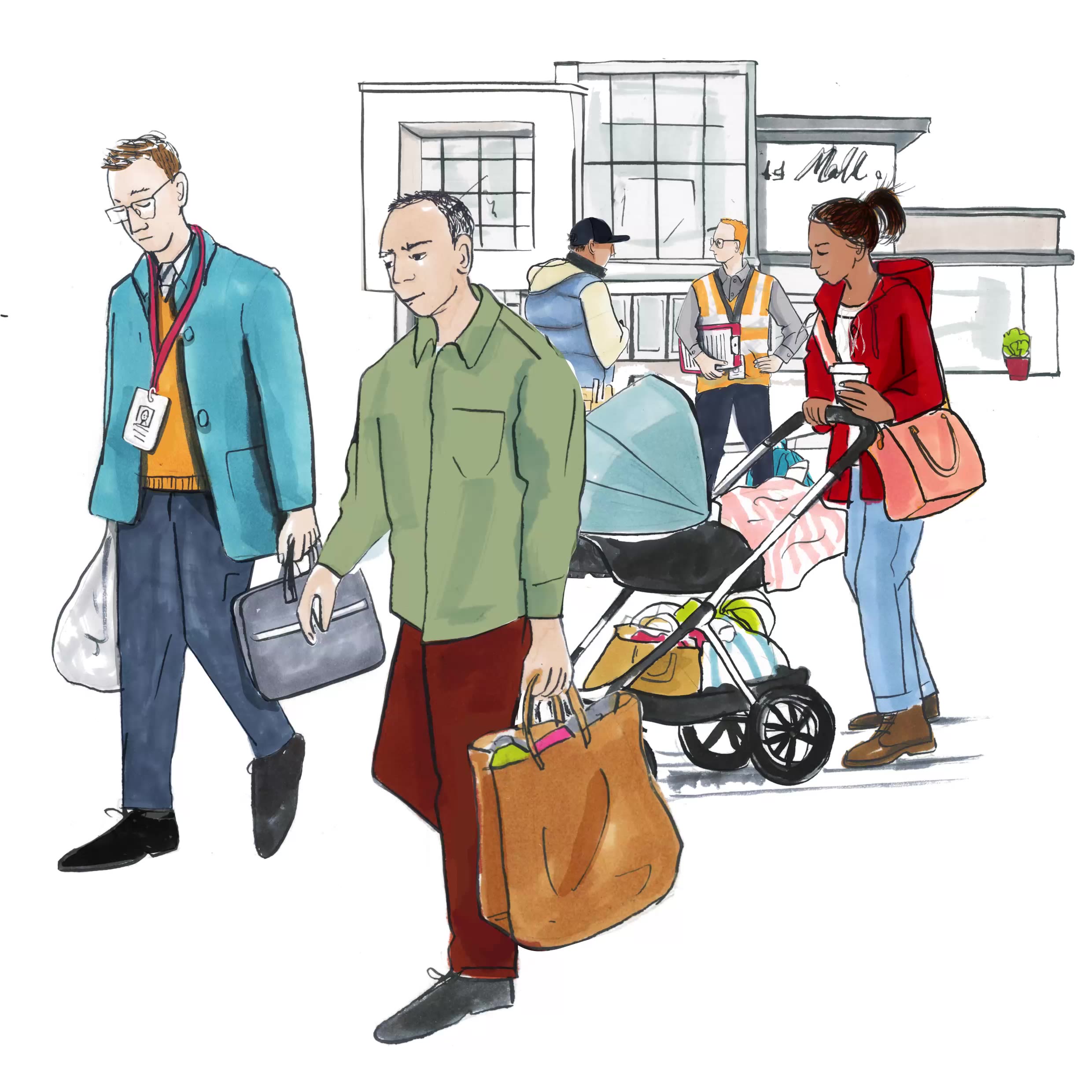
Twenty-one per cent of voters say they do not feel they can support either party, according to a recent poll by The Wall Street Journal. That compares to 12 per cent in the past two presidential elections and 13 per cent in the 2022 midterms.
The group skews male, is ideologically mixed, politically engaged and has an average age of 42. The Journal says “double haters” are most likely to back Democrats for Congress, 55 per cent to 27 per cent.
According to comments made during a BlueLabs focus group, the primary concern among double haters is the high cost of living, and they aren’t convinced that either party can help make life more manageable. “I work two jobs, and my wife works two jobs… It’s more about basic needs and day-to-day stuff, like going to the grocery store and I have to spend $50 (£37) more than I would have a few months ago for the same products,” said one double hater who participated in the panel.
A CNN poll conducted by SSRS in March found that 22 per cent of double haters disliked Democrats for their lack of action, while 11 per cent said they didn’t stand up to Trump and the GOP. A failure to confront Trump is the most common reason double haters dislike the Republicans, followed by a belief that the party doesn’t care about people, which was cited by 10 per cent of respondents.
Andrew, a 38-year-old father of two from Oklahoma, has voted for both parties in the past but is now a double hater. He tells The i Paper: “I'm just looking for practical, non-ideological-sounding people. I'm definitely going to vote... it's my duty.
“To win me back, the Republicans would have to be something fundamentally different than they are. And the Democrats need to find candidates at every level that can talk like a normal person, can string a few sentences together and make sense, and can bring some authenticity backed by some common-sense policies that get at the issues of the day that align with where they're at.
“We have so many big challenges to solve now in the long term, I just don't see anybody bringing solutions.”
“The stunning statistic from this analysis is that the one fifth of voters who view both parties unfavourably are currently supplying roughly three-quarters of the Democrats’ national lead in the generic ballot,” writes data journalist G Elliott Morris, author of Strength in Numbers: How Polls Work and Why We Need Them. “But nothing in this data says they’ve become homogeneously Democratic. Yet in November, that may not matter; a vote is still a vote.”
Gardner believes double haters are largely ignored by political strategists from both sides – and that this is a mistake, since they make up a significant number of the electorate. “Campaigns aren’t talking to them,” she says, “but these voters make a difference in marginal races.”
The weighted vest women
‘Trump is so polarising, I don't understand how he's back’

The so-called “weighted vest woman” is a potentially consequential, albeit unusual, swing voter who was identified in the results of a September 2025 survey commissioned by Republican pollster Christine Matthews and first published in Politico.
Matthews, the president of Bellwether Research, noticed a large number of women wearing weighted fitness vests while power-walking through her neighbourhood in Alexandria, Virginia. She commissioned a national poll of 1,000 women to work out their numbers (one in six women were wearing the vests) and political beliefs (they supported Trump in 2024).
She found that these women are highly engaged, educated, reliable voters. They listen to podcasts, mostly trust mainstream media and medicine, are under 45, have children and live in suburban neighbourhoods. While they narrowly broke for Trump in the 2024 presidential election, polling shows them split down the middle in a generic congressional ballot. A shift of just a few percentage points among suburban voters can change the outcome in closely contested congressional districts, including in places such as Pennsylvania’s Lehigh Valley and northern New Jersey.
Dr Dafydd Townley, chair of the American Politics Group, believes that the cost of living crisis is likely to be top of their minds, putting the Republicans at a disadvantage. It is what Caitlin — a 41-year-old middle school teacher, mother of two and registered Republican in Colorado — is most concerned about.
She abstained from voting in the last presidential election and tells The i Paper: “Trump is such a polarising individual. I don't understand how he's back with some of the things that have been done as President. Affordability is a huge issue and what I'm really dissatisfied with is that I don't see anybody coming up with a good solution.”
The Latino swing voters
‘They’re perfectly willing to punish Republicans if they don’t see improvement’

In 2024, more Latinos voted for Trump than any other Republican presidential candidate in US history, helping propel him into a second term in office. That massive support, however, now appears to be ebbing away.
Among Latinos who voted for Trump in 2024, a third say they are disappointed or regret their vote, according to a poll by Equis Research in May. A September poll by The New York Times/Siena University found 78 per cent of Latinos would prefer to see the Democratic Party in control of Congress.
Daniela, from Florida, told an Echelon Insights focus group that she thinks Trump is doing a good job but says: “Everybody was expecting the economy to be better. I see it in groceries. I have two boys at home who eat all the time, and my husband. So I go to Aldi because that’s the cheapest place, and I buy the store brand, because what I used to buy is very, very expensive.”
Latinos make up about one in four voters in the battleground state of Florida. Here, Townley believes efforts to redraw electoral boundaries could backfire for the Republicans. “[Redistricting] was done on the assumption that Latino gains among the Republican Party would last … suddenly we could see a lot more Democratic representatives come from Florida than we expected because the Latino vote is flipped.”
“In 2024, [Latinos] showed they were willing to break with longstanding Democratic voting patterns,” adds Mike Madrid, a Republican strategist and author of The Latino Century. “The 2026 midterms will provide another measure of whether those voters are developing a durable partisan attachment or becoming a larger bloc willing to punish either party when it fails to deliver.”
The middle American optimists
‘They’re less than thrilled about the state of the economy’

There’s a strong presence of “middle American optimists” in smaller towns and suburbs, according to Echelon Insights, which identifies it as one of eight political tribes in the US. This group is relatively young and more moderate than other right-leaning groups in the US, sitting in the middle of the road on most issues. They are pro-choice and optimistic about the ability to get ahead through hard work. Echelon estimates they make up about 11 per cent of the likely electorate and says two-thirds voted for Trump in 2024.
“So far, they think he is doing an OK job as president, but they’re less than thrilled about the state of the economy,” writes Echelon Insights’ pollster, Kristen Soltis, in The New York Times. “They’re younger and less churchgoing and unsurprisingly much less conservative on both cultural and economic issues than the rest of their brethren on the political right.” Thirty-seven per cent of middle American optimists say they’re definitely voting for a Republican candidate, according to Echelon Insights.
Around 17 per cent say jobs and the economy are the biggest issues facing the US, while 29 per cent believe the cost of living is the biggest problem in America. That makes them an interesting group to watch because they could be more open to shifting their support in the midterms.
Their disapproval on the economy may also mean they do not show up to vote. However, “if disenchanted Republicans turn up and vote for the Democrats, it’s going to be catastrophic for the Republicans”, says Townley.
That could be significant for places such as Iowa, Nebraska and Kansas, adds Reifler. “Iowa, which at times has elected both Democrats and Republicans, but for the last 20 years has been very decidedly Republican, the Democratic candidate might do well there. In Nebraska, there’s not a Democrat, but an independent candidate that seems to be within polling striking distance of the Republican candidate.”
The disappointed Black voters
‘It seems like we have more enemies now than ever’

Trump made significant gains with Black voters in 2024, winning 15 per cent of their vote according to the Pew Research Center. That was up from eight per cent four years earlier. But recent polling suggests those gains may not be holding. As with Latino voters, Lopez says the state of the economy is the main concern. Cuts to Medicaid, immigration issues, lack of employment and voting rights are also weighing heavily on Black voters, according to the Congressional Black Caucus Foundation.
Many are disappointed with Trump’s broken promises. “I just don’t feel like there is any positive to this administration at all,” said Charles, from Georgia, during an online focus group for messaging firm Engagious and Nelson Recruiting. “Inflation has only gotten worse. There have been more wars. The tariffs haven’t done anything. It seems like we have more enemies now than ever.”
Marcus, from Chicago, said in a Echelon Insights focus group that he is concerned about polarisation. “We’re divided, and we can’t come to terms or agreement on anything, which trickles down to everything that we need to get done,” he said.
“Trump started off OK, reversing a lot of what Sleepy Joe [Biden] did, in my opinion. But then it started sliding, and his narcissistic tendencies came out. It’s about him and his legacy — coins and his name on buildings. He’s so petty. How does he have time to sit around and tweet? If he could get out of his own way and focus on doing the job, my opinion of him would be a lot better.”
Pew Research’s July poll found that 68 per cent of Black registered voters said they would support their Democratic candidate and eight per cent that they would support the Republican. “While how people voted in 2022 [midterms] versus how they say they will vote is not a direct comparison, according to our validated voter study, in 2022, Latino voters supported the Democratic candidate over the Republican candidate 60 per cent to 39 per cent,” says Lopez. “For Black voters, it was 93 per cent to five per cent.”
This year, some Democrats believe a backlash over Republican-led redistricting efforts in states such as Louisiana, Alabama and Tennessee will galvanise Black voters and lead to higher turnout in competitive districts.
Townley believes races in Georgia will be ones to watch: “Trump is still searching for answers to support his claim that he should have won Georgia in 2020,” he says. “It would be interesting to see whether African-American and Democrat voters actually come out in force in Georgia in a sort of statement vote.”
The white rural loyalists
‘A lot of these Midwest farmers might just not turn out to vote’
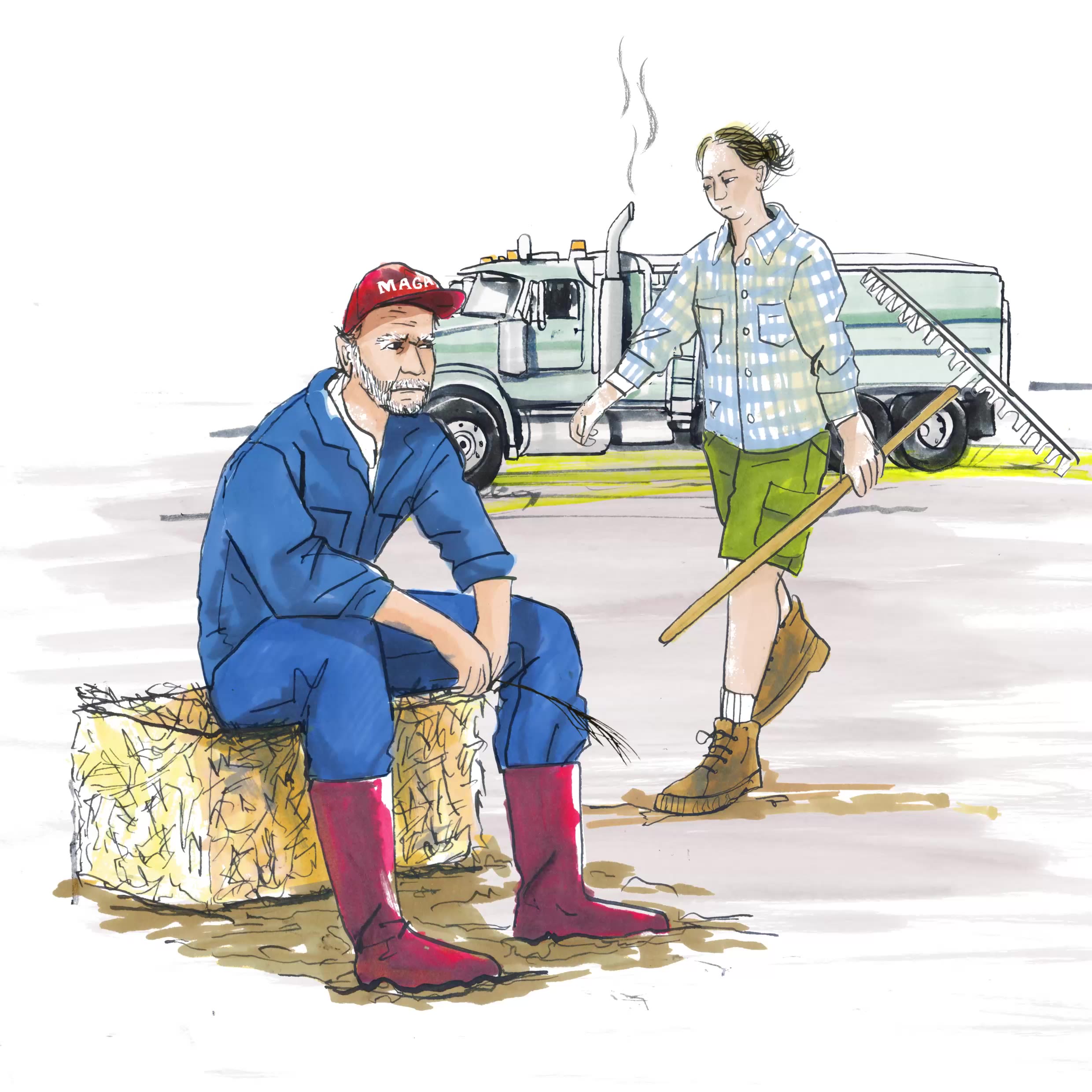
Echelon’s polling identified another group that it labelled the loyal Right. They make up 18 per cent of the electorate and are traditionally firm Trump supporters, who skew older, male and white. “If I had to choose the most important segment of the electorate this election, it would be loyal Republicans,” says David Andersen, an associate professor in US politics at Durham University. “Trump has done very well at getting these loyal Republican Maga voters to vote for him in 2016, 2020 and 2024. But he has an absolutely terrible track record of getting them to turn out to vote for other Republicans.”
Getting them to vote in the midterms this year could be crucial to counterbalance the swing towards the Democratic Party. Most live across the Midwest in rural America, says Andersen. “Right now, this is the area that is getting hurt the most through soaring diesel costs and soaring groceries because they rely upon diesel,” he adds. “I think a lot of these Midwest farmers are thinking they probably won’t support Democrats, but they might just not turn out to vote.”
Together, these groups show just how unsettled the US voters remain and how unpopular Trump has become. While there are many differences among these key voting groups, most are united by the sense that times are getting tougher under the current administration, according to Gardner: “There’s this feeling that your life is harder and harder to manage in this country if you’re just an everyday person trying do your job, support your family, and maybe go out to dinner every once in a while.”
“Up and down the ballot, Republicans are realising what kind of danger they’re in,” adds Andersen. “There is a lot of hostility in America right now, and it is directed purely at President Trump.”
However, that may not translate into Democrats taking control of both chambers of Congress. While there is clear hostility towards Trump, it remains to be seen whether that will cause voters to stay home on election day or vote Democrat.
As Andersen put it, “across the board it looks like all these undecided groups are trending towards the Democrats … the question now is just how many [key groups] turn out and how far they will swing to the left.”


 Built with Shorthand